
The Impact of ACFT Test Scores on Military Readiness and Personnel Eva…
페이지 정보
작성자 Victoria 작성일 26-09-24 01:08 조회 17 댓글 0본문
 The ACFT is not just a test of strength and endurance but a comprehensive evaluation of a soldier’s ability to perform in combat situations. The acft standards 2024 was introduced to replace the Army Physical Fitness Test (APFT) and is designed to assess a soldier's physical fitness through a series of six events: the deadlift, standing power throw, hand-release push-ups, sprint-drag-carry, leg tuck, and a two-mile run. Each event is scored, and the cumulative score determines the soldier's overall fitness level.
This event evaluates cardiovascular endurance, agility, and speed. The participant runs a distance of approximately 300 meters, completing various tasks such as crawling and sprinting. Movement to Contact (MTC): This event assesses a service member's ability to sprint and navigate obstacles.
This initiative aims to promote fairness and equality within the ranks, ultimately strengthening unit cohesion and effectiveness. As the Army seeks to ensure that all soldiers, regardless of gender or physical ability, can meet the demands of their roles, the ACFT has been designed with gender-neutral standards. While some argue that this approach may overlook physiological differences, the Army's intention is to create a level playing field where all soldiers are held to the same standard of physical readiness. The implementation of the ACFT has also sparked conversations about the inclusivity of fitness standards.
Furthermore, the ACFT's focus on functional fitness aligns with broader trends in physical training and health. This shift not only enhances military readiness but also promotes lifelong fitness habits that soldiers can carry beyond their service. As society increasingly recognizes the importance of holistic health and wellness, the Army's approach to fitness through the ACFT reflects a commitment to developing well-rounded soldiers.
Starting Position: The lift begins with the barbell resting on the ground. Proper Setup: The lifter must position themselves correctly at the barbell. Feet should be shoulder-width apart, with the barbell directly over the midfoot. The grip must remain consistent throughout the lift. The lifter must lift the barbell to a standing position, fully extending the hips and knees while keeping the shoulders back and the chest up. Repetitions: The lifter must complete three consecutive repetitions without dropping the barbell. Grip: The lifter can use either a double overhand grip or a mixed grip (one palm facing the lifter, the other facing away). Rest Period: Lifters may take a rest period between attempts, but the rest should not exceed two minutes to maintain the intensity of the test. However, the use of lifting straps is generally prohibited as they can alter grip strength measurements. Each repetition should be performed with the same technique and form as the first. Equipment: Lifters are allowed to use weightlifting belts, chalk, and specialized footwear.
Conversely, those who struggle with the test may feel discouraged or alienated, potentially affecting unit cohesion and teamwork. Another significant aspect of the ACFT is its potential impact on soldier morale and cohesion. Soldiers who perform well on the ACFT may experience a boost in confidence and self-esteem, which can translate into improved job performance and a more positive attitude toward their service. Physical fitness is often seen as a reflection of a soldier's commitment to their role and the Army's values.
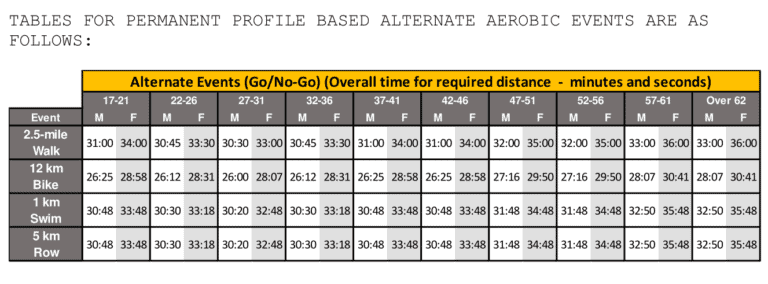
The scoring for soldiers with profiles is adjusted based on the events they are able to complete. This scoring adjustment ensures that soldiers are not penalized for limitations beyond their control. For example, if a soldier is exempt from the two-mile run, their overall score would be calculated based on the remaining events.
 The scoring system is based on a soldier's performance in each event, with a maximum score of 600 points. The ACFT consists of six events: the deadlift, standing power throw, hand-release push-up, sprint-drag-carry, leg tuck, and 2-mile run. This multifaceted approach aims to create a more accurate representation of a soldier's physical capabilities and readiness for combat. Each event is designed to assess various aspects of physical fitness, including strength, endurance, agility, and coordination.
Commanders and supervisors should be trained to recognize the importance of accommodating soldiers with profiles and to promote a positive environment where soldiers feel comfortable discussing their limitations. Moreover, leadership plays a vital role in fostering a culture of support and understanding around physical limitations.
The total score is calculated by adding the points from each event, with a maximum possible score of 300 points. Each component of the CFT is scored based on specific performance standards, with points awarded for completion times and repetitions.
Modern combat scenarios require soldiers to possess a diverse skill set, including the ability to maneuver quickly, lift and carry heavy equipment, and sustain endurance over long periods. By emphasizing functional movements and strength in the ACFT, the Army is preparing soldiers for the realities of combat, ensuring they are equipped to face the challenges of contemporary warfare. Furthermore, the ACFT's focus on functional fitness aligns with the evolving nature of warfare.
- 이전글 Wie Man Eine Duschmischbatterie Wechselt: Tipps und Anleitung
- 다음글 When to Choose Mobile Radiology Over a Traditional Imaging Center
댓글목록 0
등록된 댓글이 없습니다.